
Well Repair & Rehabilitation
Casing cracks, failed grout seals, and corroded screens don't fix themselves. We diagnose with a downhole camera and repair to TCEQ standards — without replacing the well.
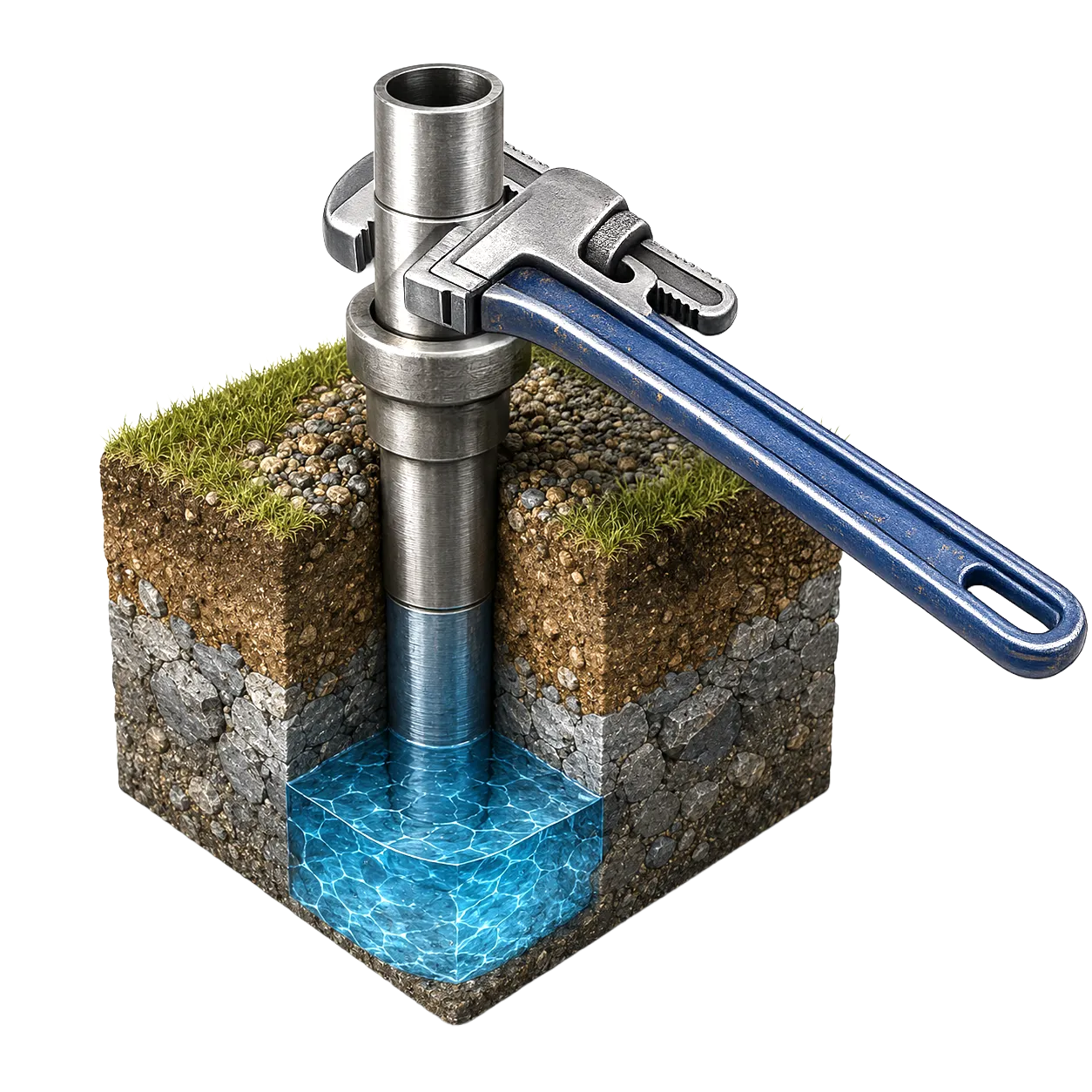
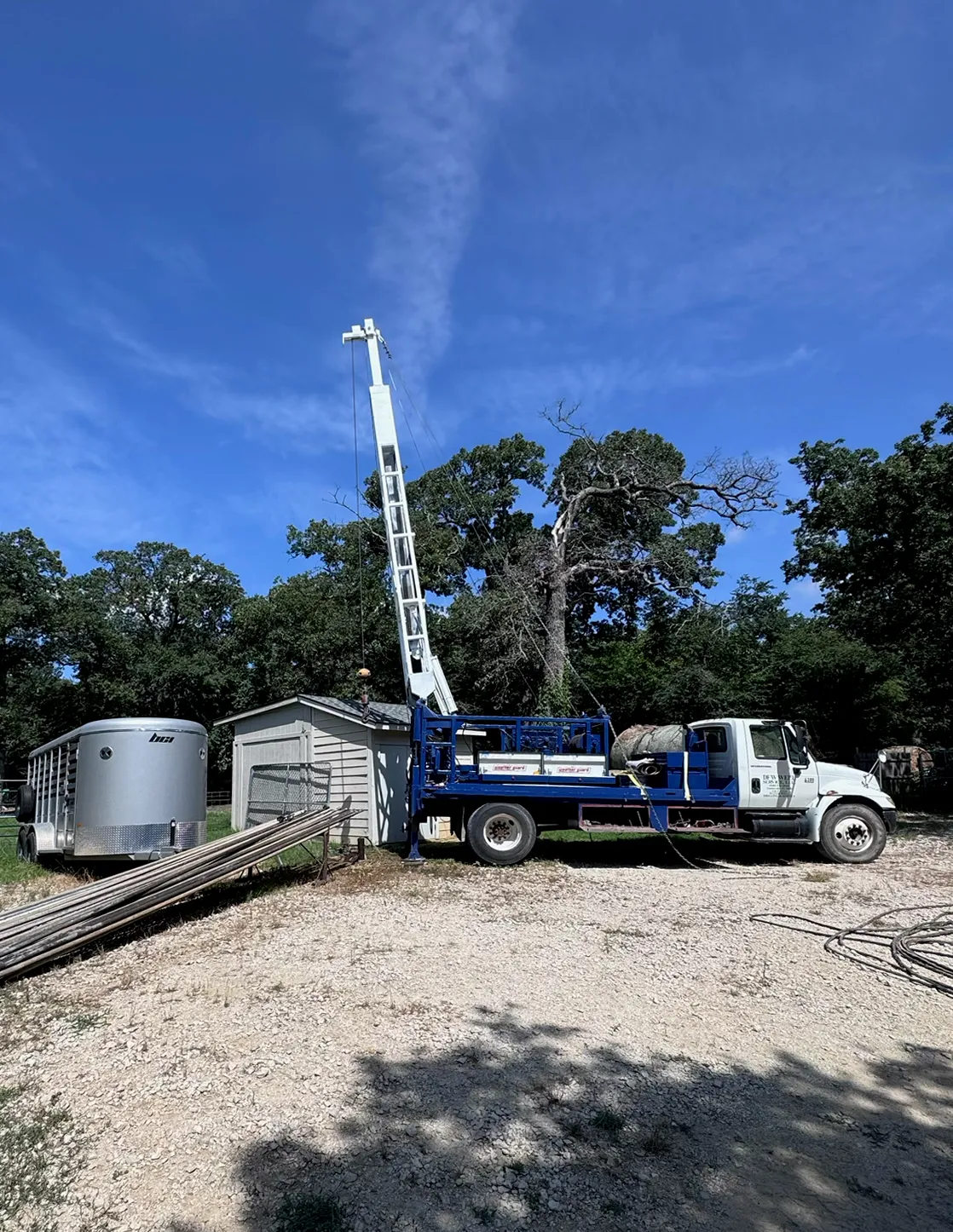
Repair First, Replace Only If Necessary
A failing well casing or screen does not always mean you need a new well. Many structural issues — cracked casing, compromised grout seals, sediment infiltration through a corroded screen — can be corrected at a fraction of the cost of a new well, provided the borehole itself is sound.
Every well repair engagement starts with a downhole camera inspection. We don't guess at the failure point — we document it, give you a written assessment, and recommend the repair method that addresses the actual problem. For older steel-cased wells in North Texas, this step alone often reveals issues that explain years of water quality problems.
What We Repair
Casing repair & liner installation
Cracked or corroded steel or PVC casing relined to restore structural integrity and exclude surface water.
Grout seal restoration
Inadequate or failed annular seals repaired to TCEQ standards — the most common source of bacterial intrusion in older wells.
Screen replacement
Corroded or clogged well screens replaced to restore yield and stop sediment infiltration.
Well cap & sanitary seal
Damaged or missing well caps and vermin-proof sanitary seals replaced to prevent surface contamination.
Structural casing repair
Offset, damaged, or collapsed casing sections addressed — including repairs related to drought-induced ground movement.
Post-repair disinfection
Shock chlorination and flushing after all repair work, with guidance on follow-up bacteria testing.
How a Well Repair Service Call Works
- 1
Camera inspection
We lower a downhole camera to document the exact condition of the casing, screen, and borehole wall. This determines whether repair is viable and which repair method applies.
- 2
Assessment and recommendation
Based on the inspection we identify the failure point — cracked casing, failed grout seal, corroded screen — and recommend the lowest-cost repair that restores structural integrity and protects water quality.
- 3
Repair or rehabilitation
We perform the approved repair: grouting, liner installation, screen replacement, or casing patch. All work follows TCEQ standards for water well construction.
- 4
Disinfection
After any repair that opens the well, we shock-chlorinate and flush the system. This eliminates any bacteria introduced during the repair process.
- 5
Documentation
You receive a written record of the repair performed, depth, materials used, and our recommendation for follow-up water testing — important for property records and future service.
Frequently Asked Questions
How do I know if my well casing is damaged?
What causes well casing failure?
Can a damaged well casing be repaired, or does it need to be replaced?
What is well grouting and when is it required?
How long does well repair take?
Will I need to disinfect the well after repair?
Well problem? Start with a camera inspection.
We diagnose before we recommend. Most well repair assessments are completed same-week across all 19 North Texas counties.