
Considering a new water well in North Texas?
Share your location, acreage, and intended water use. We can help you think through realistic next steps.
Well Drilling
New residential and agricultural water wells for North Texas homeowners, ranchers, and rural property owners. We handle permits, drilling, and TDLR completion reports.
What to Expect
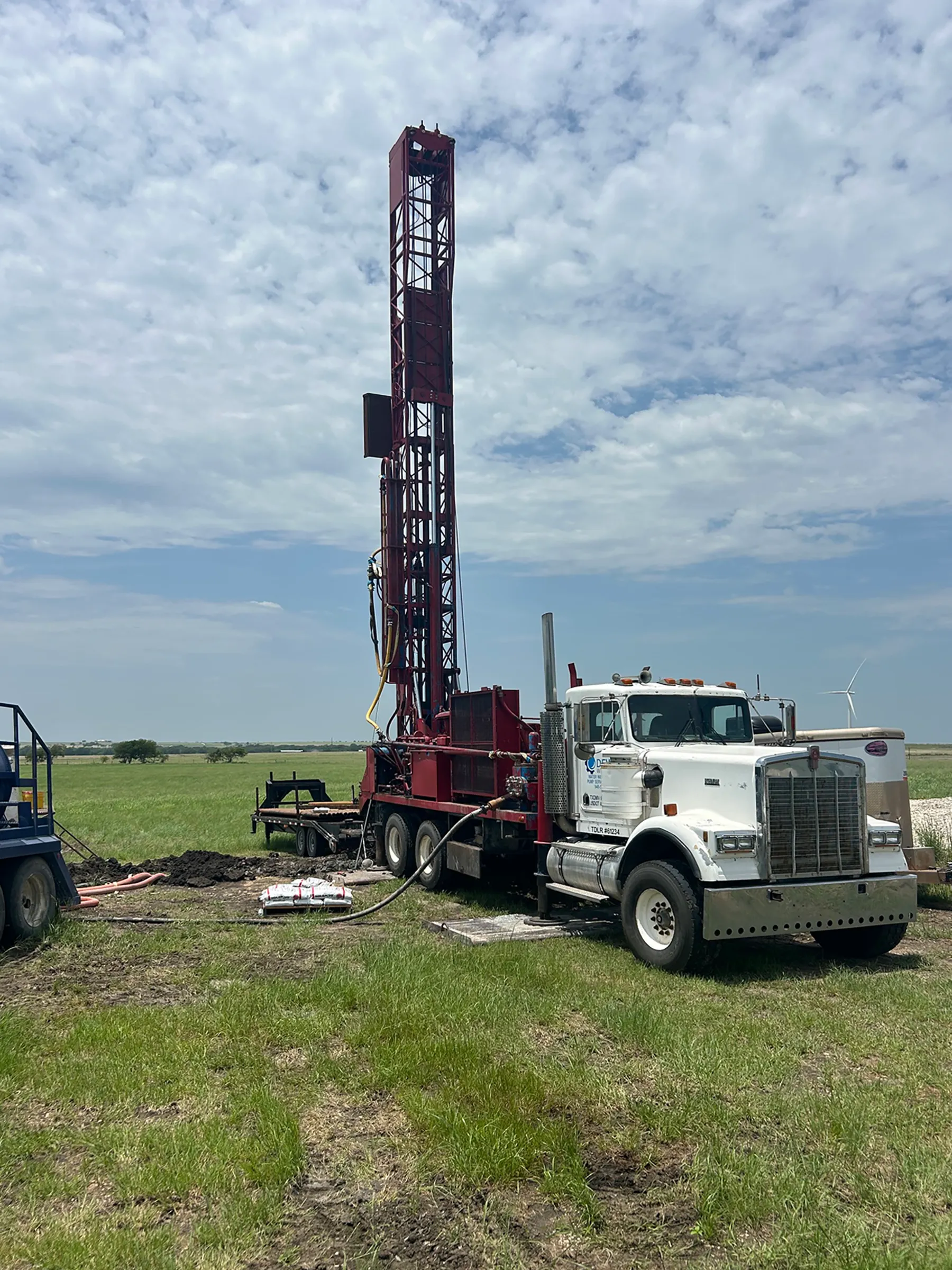
A properly drilled and permitted well is the foundation of your water supply for decades. We bring the rig, the knowledge of local geology, and the licensing — you get water and a clean paper trail with the state.
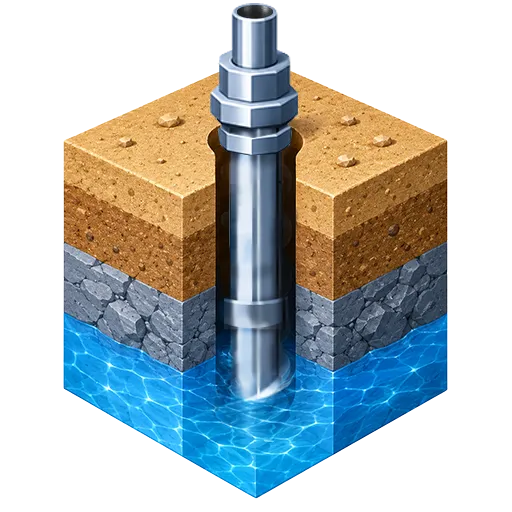
Every well we drill is registered with TDLR, cased to state standards, and documented in a formation log that becomes part of the Texas Well Report database. That record matters when you sell, refinance, or need to troubleshoot the well years from now.
How the Process Works
- 1
Site assessment
We review TWDB well records for your area, confirm setback requirements, and discuss target depth and expected yield.
- 2
Permit filing
We submit your TDLR Well Registration — and any required GCD permit — before drilling begins. Processing takes 2–5 business days.
- 3
Drilling & casing
We drill to the target zone, run steel casing, and grout the annular space to protect groundwater quality per TDLR standards.
- 4
Development & yield test
The well is developed (surged and pumped) to remove drilling debris, then flow-tested to confirm yield.
- 5
Completion report
We file the Well Completion Report (Form WCP) with TDLR and hand you a copy — your permanent record of the well.
Typical Well Depths by Region
North Texas sits on several distinct aquifer systems. Depth and yield vary significantly by county and even by tract. These are general ranges from the TWDB well records — your site assessment will narrow it down.
Wise, Parker, Hood
200 – 400 ft
Paluxy / Antlers
Denton, Cooke
300 – 500 ft
Woodbine / Trinity
Grayson, Fannin
400 – 600 ft
Woodbine / Austin Chalk
Erath, Palo Pinto
250 – 450 ft
Paluxy / Antlers
Johnson, Ellis, Somervell
300 – 500 ft
Paluxy / Trinity
Hunt, Kaufman, Rockwall
200 – 400 ft
Woodbine / Wilcox
Frequently Asked Questions
How long does it take to drill a new water well in Texas?
How deep will my well need to be?
What permits are required to drill a well in Texas?
Do you file the well completion report with TDLR?
How do I know if my property is a good candidate for a drilled well?
What happens if the well does not produce enough water?
Request a Drilling Estimate
Share your location, acreage, and intended water use. We will follow up with practical next steps.