

Parker County Water Well Regulations & Permit Requirements, TX
Quick Answer
Parker County is in the Upper Trinity GCD. A pre-drilling permit is required for all new wells, including exempt domestic and livestock wells.
Parker County sits at the western edge of the DFW metroplex, offering scenic limestone terrain that makes drilling more demanding than counties to the east. Whether you are drilling a new home well, a ranch water supply, or replacing a failing system, your regulatory starting point is the Upper Trinity Groundwater Conservation District.
Which GCD Governs Parker County?
Parker County is fully within the Upper Trinity Groundwater Conservation District (Upper Trinity GCD), which also covers Hood, Montague, and Wise counties. The Upper Trinity GCD operates under Texas Water Code Chapter 36 and manages the Trinity aquifer system — the region’s primary groundwater resource.
| Step | Action | Who Is Responsible |
|---|---|---|
| 1 | Hire a TDLR-licensed water well driller | Property owner |
| 2 | Submit pre-drilling permit application to Upper Trinity GCD | Licensed driller |
| 3 | Receive permit approval — drilling may not begin before this | Upper Trinity GCD |
| 4 | Drill well in compliance with permit conditions | Licensed driller |
| 5 | File completion report with TDLR within 60 days | Licensed driller |
Parker County Geology & Typical Well Depths
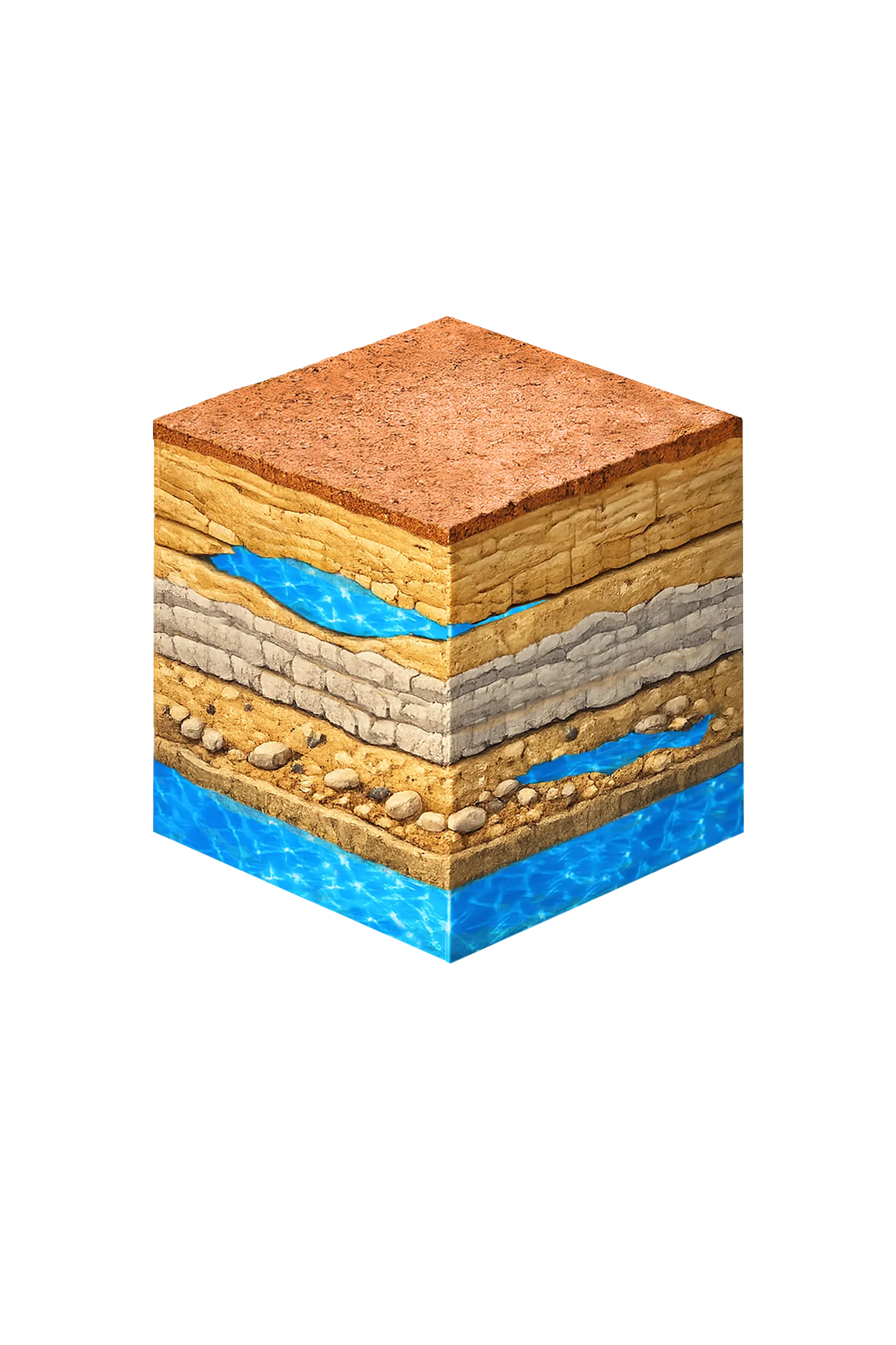
Parker County’s geology is dominated by Cretaceous limestone formations. The Trinity aquifer system is the primary groundwater source, accessed through the following formations:
| Formation | Typical Depth | Character |
|---|---|---|
| Paluxy | 150–350 ft | Sandy intervals; better yield potential |
| Glen Rose | 300–550 ft | Hard limestone; slower to drill, stable water quality |
| Twin Mountains | 400–700 ft (western Parker County) | Sandy basal Trinity; encountered where deeper drilling is required |
| Alluvial / Shallow | 30–80 ft | Unreliable for domestic use; not recommended as primary source |
The limestone formations mean drilling is slower and costs more per foot. Budget $48–$65/ft for drilling alone, plus casing, pump, and system costs.
Exempt vs. Non-Exempt Wells Under UTGCD Rule 3.1
The Upper Trinity GCD uses a use-category structure for exemption rather than the 25,000 gallons per day default that appears in many other parts of Texas. Under UTGCD Rule 3.1:
- Wells used solely for domestic use, livestock, poultry, or agriculture are exempt from production limits with no volume cap.
- Wells used for other purposes (commercial, industrial, irrigation, public supply) by anyone other than a retail public utility are exempt only if the pump’s capacity is 17.36 gallons per minute or less.
- Leachate wells, monitoring wells, and closed-loop geothermal wells are also exempt.
Even exempt wells require UTGCD registration and pre-drilling permitting, and must meet UTGCD’s spacing rules. Non-exempt wells require meters and annual production reporting.
A note on oil and gas: wells used solely to supply rigs actively drilling or exploring oil and gas wells permitted by the Railroad Commission are exempt. Wells used to supply water for hydraulic fracturing are not exempt.
Working With a Licensed Driller
All water wells in Texas must be drilled by a contractor holding a valid TDLR Water Well Driller license. In Parker County’s hard limestone terrain, experience with Trinity aquifer formations matters as much as licensing. An experienced driller will review TWDB well logs for neighboring properties, assess likely depth and yield, and handle the Upper Trinity GCD permit application from start to finish.
DFW Well Service (TDLR License #61234 DKMPW) drills throughout Parker County — from Weatherford and Springtown to Millsap and Aledo. Call us at (940) 536-8560 to discuss your property and get a site-specific estimate.
Parker County’s limestone terrain rewards patient, experienced drilling. With the right contractor and a clear understanding of the permitting process, most Parker County property owners complete well installation without major surprises. Start by confirming your location is in the Upper Trinity GCD service area and budget appropriately for the depth and hardness you will encounter.