

Planning a well in Cooke?

Local requirements can vary by property, groundwater conservation district, and intended use. We can help you understand the practical next steps. We do not provide legal advice.

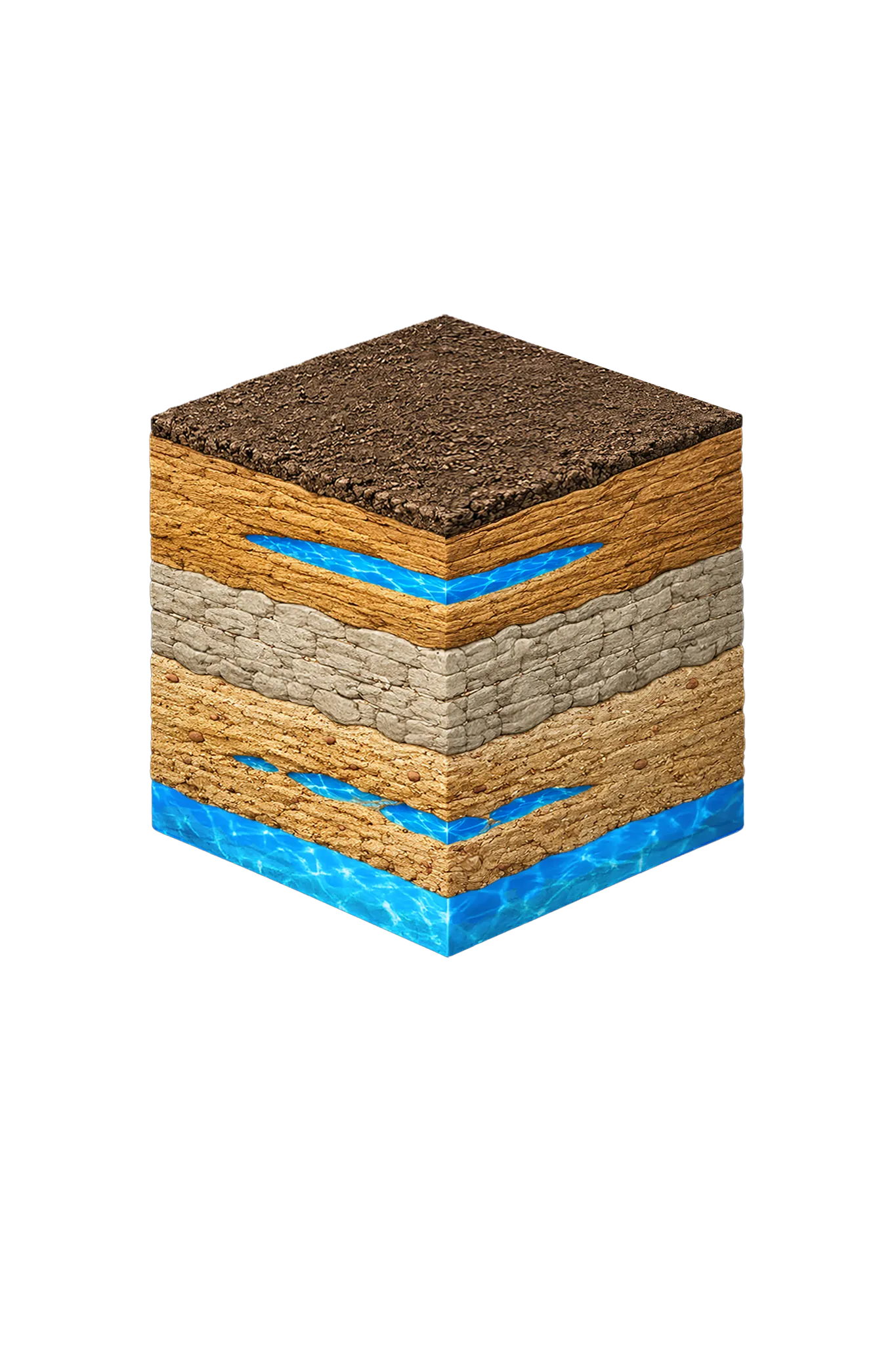
Isometric geological cross-section cube illustration showing Cooke County, Texas stratigraphy — Topsoil, Local alluvium along Red River and major streams, Washita and Fredericksburg Groups (confining units), Antlers Formation (Trinity), and the Trinity (Antlers) aquifer at the base.
Click the image to explore Water Well Geology in the Cooke County Area

Cooke County Water Well Regulations & Permit Requirements, TX

Quick Answer

Cooke County is in the North Texas GCD. Registration must be approved and the fee paid before any new well is drilled, including exempt domestic wells.

Planning a well in Cooke County?

Local requirements can vary by property, groundwater conservation district, and intended use. We can help you understand the practical next steps. We do not provide legal advice.

Which GCD Governs Cooke County?

Cooke County is fully within the North Texas Groundwater Conservation District (NTGCD), which also covers Collin and Denton counties. NTGCD was created by the Texas Legislature in 2009 under Special District Local Laws Code Chapter 8856, and it operates under Texas Water Code Chapter 36. The district’s current rules (as amended February 11, 2020) and its current fee schedule are published at northtexasgcd.org.

NTGCD rules apply uniformly across Cooke County. The same registration, exempt structure, spacing table, and fee structure apply whether your parcel is in western Cooke County near Muenster or in eastern Cooke County near Callisburg.

Step-by-Step: Drilling a Well in Cooke County

StepActionWho Is Responsible
1Hire a TDLR-licensed water well drillerProperty owner
2Submit well registration application to NTGCD and pay the registration fee ($250 per well on the current fee schedule)Licensed driller
3Receive registration approval — drilling may not begin before this, even for exempt wellsNTGCD
4For non-exempt wells (over 17.36 gpm), also obtain an NTGCD Production Permit under Rule 3.9Licensed driller
5Drill the well in compliance with spacing and construction requirementsLicensed driller
6File the State of Texas Well Report with TDLR within 60 days of completionLicensed driller
7For non-exempt wells, install a meter and begin monthly meter readings with quarterly reportingProperty owner / driller

Exempt vs. Non-Exempt Wells in Cooke County

NTGCD Rule 3.7 sets the exemption structure, and it does not match the Texas Water Code 36.117 statewide default. Exemption is a capacity test, not a use test: a new well is exempt from the Production Permit and production-fee requirements if its capacity, as equipped, is not greater than 17.36 gpm. The use of the water does not matter, and the district imposes no minimum tract size.

The flip side is that wells over 17.36 gpm are non-exempt even when used for domestic, livestock, or agricultural purposes. Non-exempt agricultural wells are metered and reported like any other non-exempt well, though they pay a reduced production fee ($1 per acre-foot instead of the volume-based rate).

The statewide default of 25,000 gallons per day from Texas Water Code 36.117 is not the operative rule in Cooke County. NTGCD uses a capacity test (17.36 gpm), not a daily-volume test. The 25,000 gpd figure is only an approximate unit conversion; the binding local rule is the 17.36 gpm capacity test.

Exempt wells still require registration before drilling, still must meet the Rule 4.2 spacing requirements, and the driller still files the State of Texas Well Report with TDLR.

Well Spacing Rules

NTGCD Rule 4.2 sets a minimum distance from the property line for every new well, plus a capacity-based minimum distance from existing registered wells completed in the same aquifer:

Capacity of proposed wellFrom property lineFrom existing wells (same aquifer)
17.36 gpm or less50 ft100 ft
Greater than 17.36 gpm50 ft1,175 ft + (1.2 × gpm of proposed well)

The spacing requirements apply to all aquifers in the district and to exempt and non-exempt wells alike. New wells or well systems with a proposed aggregate capacity of 200 gpm or more also require a hydrogeological report meeting the district’s requirements, and a new well must be drilled within 30 feet of the location approved in the registration.

Fees and Reporting

A non-refundable well registration fee, set under NTGCD Rule 9.12, applies to every new well, including exempt wells. On the district’s current fee schedule (effective August 1, 2025), the fee is $250 per well for wells of 17.36 gpm or less; wells over 17.36 gpm pay a $750 combined registration and Production Permit application fee. Confirm current amounts at northtexasgcd.org before budgeting.

Non-exempt wells also pay water-use fees under Rule 9.2 — currently $0.10 per 1,000 gallons for non-agricultural use up to 10 million gallons per quarter (higher tiers above that), and $1 per acre-foot for agricultural use. Non-exempt wells must be metered, with meter readings recorded monthly (within 10 days of the last day of each month) and production reported quarterly: each quarter’s report is due within 30 days after the quarter ends, and fee payment is due within 60 days of the end of the quarter.

Working With a Licensed Driller

All water wells in Texas must be drilled by a contractor holding a valid TDLR Water Well Driller license. Cooke County’s geology runs from Antlers Formation outcrop in the western part of the county to Woodbine outcrop and deeper Antlers subcrop in the central and eastern parts. An experienced driller will review TWDB records for nearby wells, assess which aquifer is the right target for your parcel, and handle the NTGCD registration and (if applicable) Production Permit paperwork.

DFW Well Service (TDLR License #61234 DKMPW) drills throughout Cooke County — from Muenster and Lindsay to Gainesville, Valley View, and Callisburg. Call us at (940) 536-8560 to discuss your property and get a site-specific estimate.

Frequently Asked Questions

Is the well water in Cooke County salty or brackish?
Usually not in the zones home wells use. The Woodbine is generally fresh in its outcrop band through central and eastern Cooke County down to about 1,500 feet, and the Antlers (Trinity) is fresh where it outcrops in the west. Water grows saltier with depth and toward the southeast (downdip), per Texas Water Development Board mapping. Test for total dissolved solids on any deeper well.
Which GCD governs water wells in Cooke County?
Cooke County is within the North Texas Groundwater Conservation District (NTGCD), which also covers Collin and Denton counties. NTGCD operates under Texas Water Code Chapter 36 and was created by the Texas Legislature in 2009. The district's current rules, as amended February 11, 2020, are published at northtexasgcd.org.
Do I need a permit before drilling a well in Cooke County?
Yes. All new wells in Cooke County must be registered with NTGCD before drilling, including new exempt domestic and livestock wells. NTGCD Rules 3.1 through 3.3 require that the registration application be approved before any new well is drilled, and the non-refundable registration fee — $250 per well on the district's current fee schedule — must be paid for the application to be administratively complete. Non-exempt wells also require a Production Permit under Rule 3.9. Your TDLR-licensed driller will handle the paperwork.
What counts as an exempt well under North Texas GCD rules?
Exemption in Cooke County is a capacity test, not a use test. Under NTGCD Rule 3.7, a new well is exempt from the Production Permit and production-fee requirements if its capacity, as equipped, is 17.36 gallons per minute or less — regardless of what the water is used for, with no minimum tract size. Wells over 17.36 gpm are non-exempt even when used for domestic, livestock, or agricultural purposes (non-exempt agricultural wells pay a reduced production fee). The Texas Water Code default of 25,000 gallons per day does not apply in Cooke County. Exempt wells still require registration, still must meet spacing rules, and the driller still files the State of Texas Well Report with TDLR.
How far apart do wells have to be in Cooke County?
NTGCD Rule 4.2 sets spacing by the capacity of the proposed well. Every new well must be at least 50 feet from the property line. Wells with a capacity of 17.36 gpm or less, as equipped, must also be at least 100 feet from existing registered wells completed in the same aquifer. Wells over 17.36 gpm must be at least 1,175 feet plus 1.2 feet per gpm of proposed capacity from existing registered wells in the same aquifer.
How deep are wells typically drilled in Cooke County?
Depths vary substantially by location and target aquifer. In central and eastern Cooke County (the Gainesville area), wells often target the Woodbine first; in western Cooke County (Muenster, Lindsay, Myra), wells more commonly target the Antlers Formation where it is exposed near the surface. Historic Gainesville-area Trinity Group municipal wells were often 840 to 1,025 feet deep, but those are public-supply records and are not a reliable model for a single-home residential well. Estimate from nearby driller logs rather than a countywide rule of thumb.
Why does Cooke County's geology look different from counties to the south?
The Glen Rose Limestone is absent across Cooke County. Where the Glen Rose is present (in Parker, Hood, Tarrant, and southern Wise County), it separates two Trinity sandstone units. Across Cooke, the Paluxy and the Twin Mountains coalesce into a single sand-and-gravel unit called the Antlers Formation, up to about 900 feet thick with clay beds in the middle section. That is why drillers in western Cooke County can sometimes reach productive Trinity sand at shallower depths than drillers working further south — they are tapping the Antlers outcrop, not the deep confined Trinity.
Do I have to meter and report water use in Cooke County?
Only for non-exempt wells. Under NTGCD Rule 9.1, non-exempt wells must be metered, meter readings must be recorded monthly (within 10 days of the last day of each month), and production is reported quarterly — each quarter's report is due within 30 days after the quarter ends, with water-use fee payment due within 60 days of the end of the quarter. Exempt wells (capacity of 17.36 gpm or less) do not require meters or production reporting.
What water quality issues should Cooke County well owners anticipate?
Common concerns include iron and manganese in Woodbine outcrop wells, hardness in both aquifers, localized hydrogen sulfide, and dissolved solids that worsen down-dip toward the southeast. The upper Woodbine has poor-quality water in down-dip locales; the lower two water-bearing zones are the ones generally developed for domestic use. The Antlers in western Cooke County is generally good quality but variable parcel to parcel. After drilling, test for coliform bacteria, nitrates, iron, manganese, hardness, sulfate, pH, and total dissolved solids before purchasing any treatment equipment.

Get Practical Next Steps

Local rules can vary by property and use. Tell us about the project and we can help you think through next steps.

Fields marked * are required.